Northern Tier is the oldest High Adventure program in Scouting — over 100 years of Scouts paddling pristine lakes, sweating over portages and camping where the map runs out. We're going for ten nights out of Ely, Minnesota. This is our crew's guide to getting there.

No cabins. No cell service. No adult telling you what happens next — because the crew leader is a Scout, and the route is whatever your crew decides it is.
Kevlar canoes, three Scouts to a boat. Easy days are 8–12 miles. Hard days are 20+. Your crew picks which kind of day you want — and then has to actually do it.
A portage means everything — canoes, packs, food — goes on your shoulders and up the trail. Single-trip portaging. Up to 85 lbs. It's the part everybody brags about later.
Eight nights camped in the Boundary Waters at designated sites with a fire grate and a pit toilet — and if your crew paddles far enough, you may not see another group for days.
A Scout is elected Crew Leader and runs the show: the route discussion, the pace of travel, the duty roster. Adults are there as coaches and for safety — not to hand out orders.
Riding along is your Interpreter — a specially trained Northern Tier staff member who teaches canoe country skills, keeps you safe, and knows the history and stories of the North Country. They stay with your crew the whole trip.
Work through these in order. Every page below pulls straight from the official Northern Tier planning guide.
Deposits, payment deadlines, permit info, roster dates. Miss April 1 and it gets ugly — here's the whole runway.
See the timeline Step 2Swimmer classification, six months of conditioning, the J-stroke, carrying a 50 lb pack, height & weight limits.
Start training Step 3Medical form, swim classification record, adult certifications and everything checked at the gate on arrival day.
Check the list Step 4Bear bags, water purification, no cliff jumping, boots on at all times, and the short list of what to leave home.
Read the rules Step 5What you eat, where you sleep, the gear that's provided, and what actually happens in an emergency on the trail.
See camp life Step 6Interactive checklist that saves your progress, plus printable and downloadable versions for your parents.
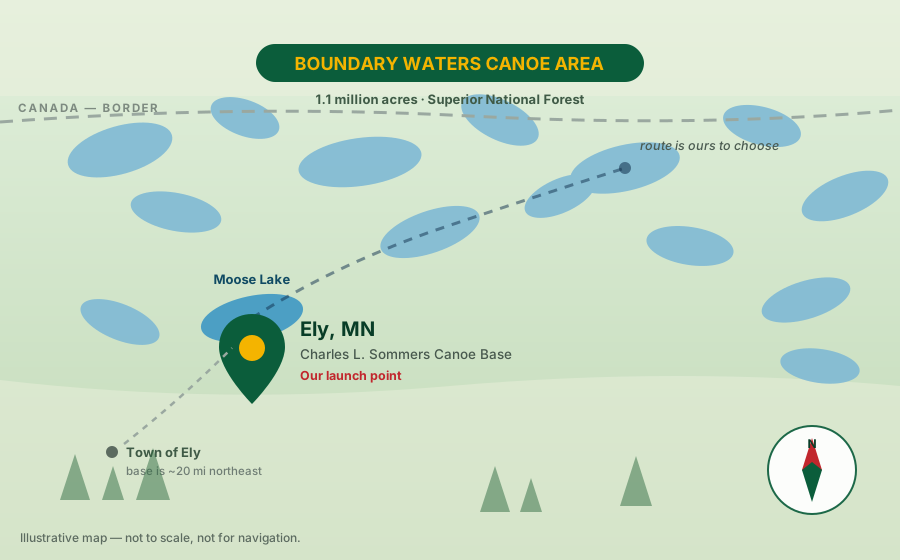
Open the checklistWe launch from the Charles L. Sommers Canoe Base outside Ely, Minnesota — Northern Tier's oldest base, outfitting crews off Moose Lake since 1941.
From there we paddle the Boundary Waters Canoe Area Wilderness: 1.1 million acres in the Superior National Forest, stretching nearly 150 miles along the Ontario border. It's the largest federally designated wilderness area in the contiguous United States, and the premier wilderness canoeing destination in the world.
Northern Tier books our permit and the fees are included. No border crossing, no passport — just ten nights of water, rock and pine.
Paddling all day, then portaging packs and canoes. This is why six months of conditioning is strongly recommended — not optional advice.
Cell phones are discouraged and there is essentially no reception. Your Interpreter carries a radio or satellite phone for emergencies only.
Boots stay on in the water. Rain gear must be actually waterproof. Ponchos are banned — they're dangerous if a canoe swamps.
Three meals a day of legitimately good trail food, plus a spice kit, drink mixes, and enough baking supplies to make bannock over a fire.
Bears, chipmunks and mice all want your dinner. Anything that smells — toothpaste and lip balm included — goes up in the bear bag every night.
That's the entire point. Northern Tier's stated goal is a wilderness adventure that lasts a lifetime.
— Sigurd Olson, quoted in the Northern Tier planning guide. Grab the packing list, start training, and let's go.