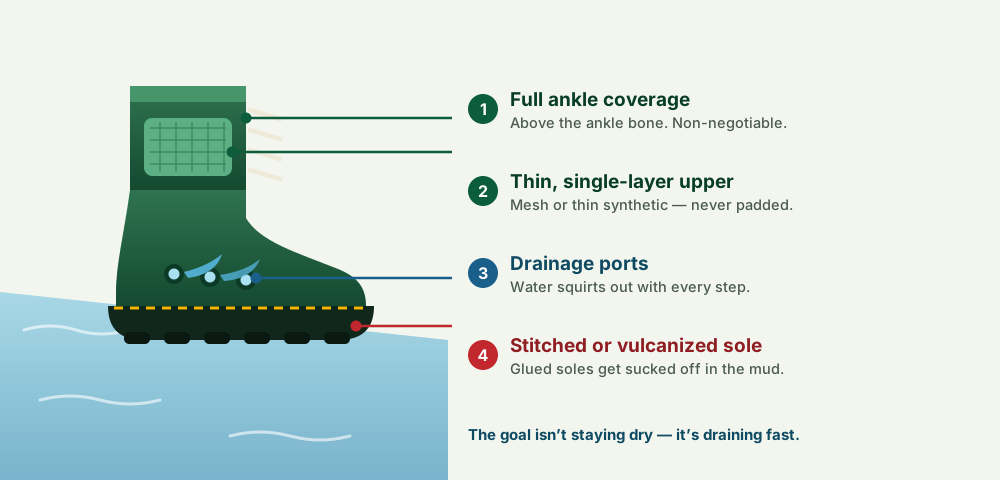
Read this before you spend a dollar. The official requirement: boots must have
full ankle coverage, a rugged stitched or vulcanized sole, and drainage at the instep —
and they must NOT be waterproof. There are no exceptions to the boot rule. If you're unsure about a pair,
contact Northern Tier before you travel.
Why waterproof is the enemy
Northern Tier runs on wet footing. You step out of the canoe into the lake, you walk
portages through mud and standing water, and your feet stay wet essentially all day, every day.
Given that, a waterproof boot doesn't keep water out — it just keeps water in. Water pours over the
top, the membrane traps it, and now you're carrying a canoe across a quarter-mile portage with two heavy buckets
strapped to your feet. Wet all day is fine. Wet and heavy all day causes blisters and misery.
So the goal isn't dryness. The goal is drainage. A good Northern Tier boot fills instantly, then squirts
the water back out with the next few steps.
The ankle requirement is separate and just as serious: the lake bottoms are covered in loose, sharp
“ankle-biter” rocks you can't see, and you'll be stepping onto them blind while carrying 50–85
pounds. High tops aren't about comfort — they're what keeps a rolled ankle from ending your trek and
triggering a multi-day canoe evacuation.
The three must-haves
Shopping in a store with no idea what you're looking at? Run these three checks.
1. The squeeze test
Squeeze the boot in your hand. If it feels like a puffy pillow, put it back. You want thin,
single-layer mesh or thin synthetic. Padding is insulation, and insulation holds water.
2. Visible vents
Look for metal grommets or mesh panels near the instep (the arch). If there is no obvious path for
water to squirt out when you step down, the boot will not pass.
3. Stitched or vulcanized sole
Not glued. Northern Tier mud can literally suck the sole off a cheap shoe, and a delaminated boot on
day three is a genuine problem with no fix.
Boots crews actually use
These are the models that reliably pass check-in. Prices are ballpark and move around —
shop sales, and check the Northern Tier Trading Post too.
Merrell Moab Ventilator
(mid)
$100–150
Easiest to find
- Why it works
- The default choice. Reliable, widely available in most towns, and usually stocked at the base Trading Post
if something goes wrong.
- Watch out
- Buy the Ventilator, never the Waterproof or GTX version of the same boot — the names are
nearly identical on the box.
Altama OTB Maritime
(mid / high top)
$110–135
- Why it works
- Designed for Navy SEAL “over the beach” operations. Drainage ports in the sole and sides, and
the high-top version gives the required ankle support.
- Watch out
- Very flat sole — consider an aftermarket insole for long portages.
Astral TR1 Merge / Mesh Hi
$130–165
- Why it works
- Highly breathable mesh that drains instantly, and Astral's “G” rubber grips slick wet rock
unusually well. The Merge is often stocked directly by Northern Tier.
- Watch out
- Get the Hi version — the low cut won't satisfy the ankle rule.
Astral Hiyak
$150–160
- Why it works
- Minimalist but rugged, dries exceptionally fast, and the hidden lace system prevents snags on brush and
gunwales.
- Watch out
- Less structured than the others — try it under a loaded pack before committing.
Chaco Canyonland
(mid)
$120–140
- Why it works
- A sneaker/boot hybrid that drains well and has a rugged vulcanized sole.
- Watch out
- Make sure it feels secure enough carrying heavy portage loads.
Salomon XA Forces Jungle
$210–220
- Why it works
- Built for tropical environments. Massive lateral drainage ports, an extremely rugged sole, and excellent
ankle support under heavy portage loads.
- Watch out
- The pricey option — but the most durable on this list.
Same boot, two versions. Several of these are sold in both a ventilated and a waterproof/GTX version with
nearly identical names. Always buy the ventilated one. If the box says Gore-Tex, it's the wrong boot.
What gets you sent to the Trading Post
Gore-Tex / waterproof boots
They fill from the top and then hold the water in. Heavy, slow to dry, and a blister factory.
Low-cut trail runners
They drain beautifully and fail the requirement anyway — no ankle coverage, no protection on the rocks.
Neoprene booties
No rugged sole. Fine in a boat, useless over a rocky quarter-mile portage.
Cheap glued water shoes
The mud pulls the sole clean off. This is the classic day-three disaster.
Heavy insulated hikers
Thick padding holds several pounds of water and never dries overnight.
Rubber rain boots
No drainage, no ankle support, and they come off in deep mud.
The Trading Post trap. Crews arriving with inadequate footwear are required to buy boots at the base
before they're allowed on the water — at base prices, in whatever sizes are left, with zero break-in
time. Get this right at home.
Socks matter just as much
Your feet are wet 24/7 for ten days. The wrong socks give you trench foot by day three
— and that's not a joke, it's the most common preventable injury on this kind of trip.
- Synthetic or wool only. Darn Tough and Smartwool are the usual picks. Wool keeps insulating even when soaked.
- Never cotton. Cotton holds water against your skin, doesn't insulate wet, and shreds your feet. The packing list says this for a reason.
- Three pairs is the required quantity — rotate them so one pair is always drying on your pack.
- Dry your feet at camp. Boots and wet socks come off, camp shoes go on, and let your feet air out every evening. This one habit prevents most foot problems.
- Medicated foot powder is on the crew gear list. Use it. Nightly.
Fitting & breaking them in
- Buy early — months earlyGear makes a great Christmas present, and you need real time to break boots in and find out they don't work before the trip.
- Fit them with your trail socks onTry boots on wearing the wool or synthetic socks you'll actually wear. Sock thickness easily changes your size by a half.
- Leave room at the toeAbout a thumb's width. Feet swell on long days, and downhill portages will jam your toes forward.
- Check the heelYour heel shouldn't lift when you walk. Heel lift plus wet feet equals blisters, guaranteed.
- Test them wetGenuinely: wear them into a creek or a bathtub, then walk around. See how fast they drain and whether anything rubs when soaked. Wet boots fit differently than dry ones.
- Put on real milesHike in them with a loaded pack — ideally the 50 lb pack from your training plan. Blisters found at home are free; blisters found on day two are not.
- Pack moleskin regardlessEven perfect boots can rub after ten days. Moleskin and molefoam are on the crew first aid list.
Don't forget camp shoes. Separate from your boots, everyone needs closed-toe, closed-heel camp shoes with
hard soles — lightweight sneakers are perfect. That's what your feet live in around camp while the boots
drain. Flip flops are for the shower building on base only and are not permitted on the trail.
Boot requirements summarized from the Northern Tier Advisor’s
Planning Guide (Appendix F). Model suggestions and prices are our own research to help crews shop — they are
not endorsed by Northern Tier, and prices change. When in doubt about a specific pair, call Northern Tier at
218.365.4811 before you buy.